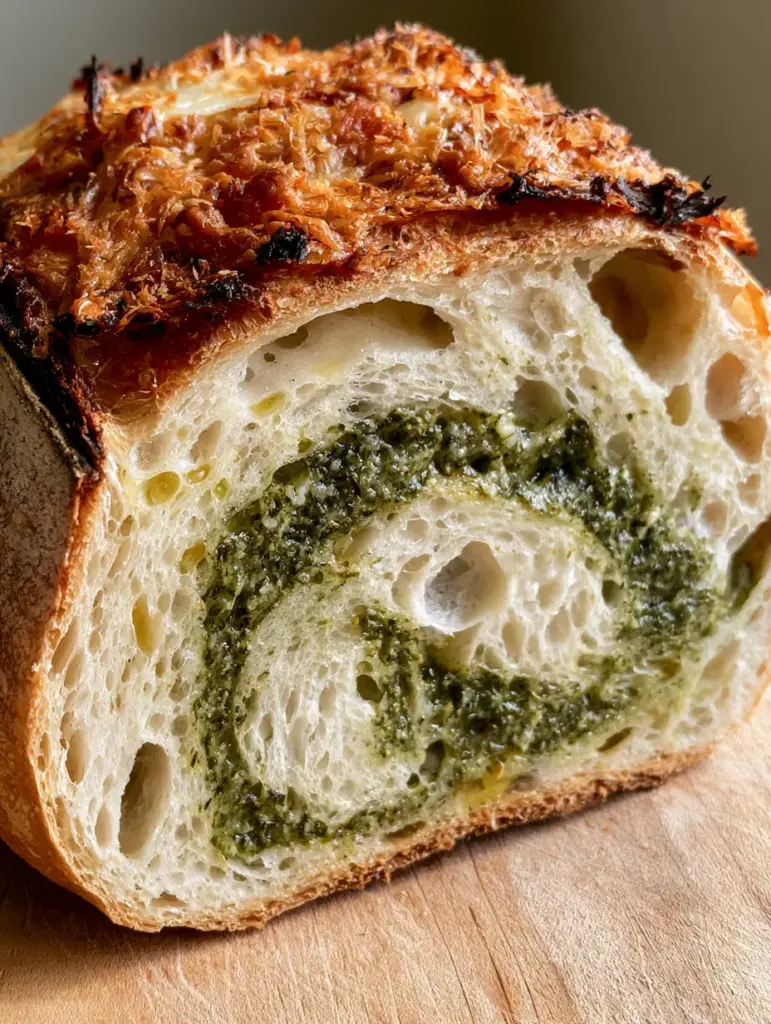
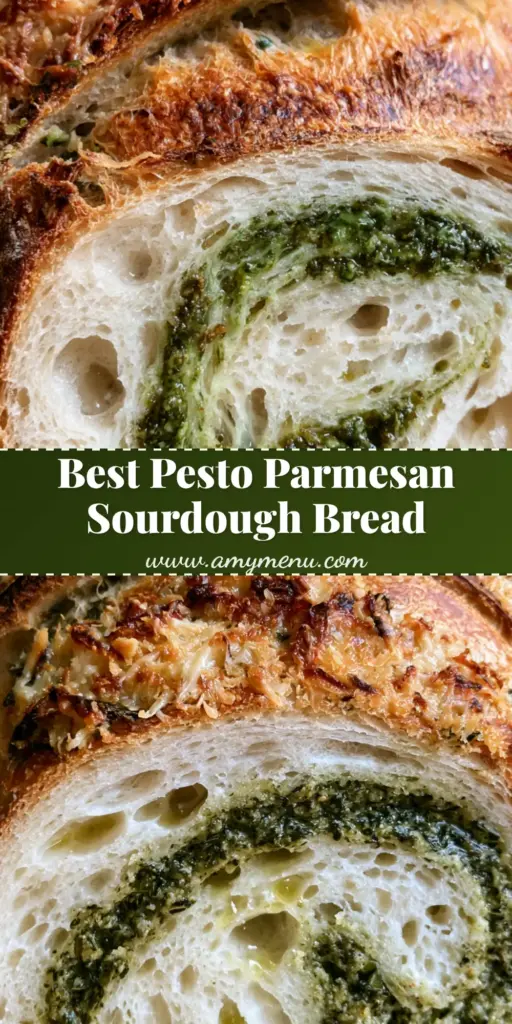
Pesto Parmesan Sourdough Bread is the ultimate artisanal fusion, combining the tangy complexity of a long-fermented dough with the bold, herbaceous punch of vibrant basil pesto. If you have been searching for a bread that looks like it came from a high-end boutique bakery, this recipe delivers a stunning vibrant green basil pesto swirl and a rustic bread crust topped with toasted parmesan cheese.
The magic of this Pesto Parmesan Sourdough Bread lies in the contrast between the crunchy, charred cheese exterior and the incredibly soft, airy crumb. Every slice reveals intricate green ribbons and fine droplets of olive oil, making it a masterpiece for your dinner table. Whether you are a seasoned sourdough baker or looking to level up your weekend baking, this loaf is designed to impress both the eyes and the palate.
Why You Will Obsess Over This Pesto Sourdough
- Visual Masterpiece: The heavy swirl of dark green basil pesto creates a high-contrast interior that looks incredible on Pinterest and your dining table.
- Textural Contrast: You get a thick, crunchy, rustic golden-brown crust paired with a soft and airy crumb featuring large, beautiful open holes.
- Explosive Flavor: The combination of tangy sourdough, nutty toasted parmesan cheese, and aromatic basil is a savory trifecta.
- Professional Finish: We use specific lamination techniques to ensure the pesto stays in distinct swirls rather than turning the whole loaf a muddy green.
Essential Ingredients for Your Pesto Sourdough Boule
To achieve the forensic visual accuracy of a professional loaf, each ingredient serves a specific culinary purpose. We are aiming for a highly hydrated, fermented sourdough dough that can support the weight of the pesto and cheese.
- Active Sourdough Starter: 1/2 cup (100g). Ensure your starter is bubbly and at its peak to guarantee that airy crumb.
- Warm Filtered Water: 1 1/2 cups (350ml). The foundation of our hydration, helping to develop those large holes in the crumb.
- Bread Flour: 4 cups (500g). A high-protein flour is non-negotiable for the strength needed to hold the heavy pesto swirl.
- Fine Sea Salt: 2 tsp (10g). Essential for tightening the gluten structure and enhancing the savory notes.
- High-Quality Basil Pesto: 1/2 cup (120ml). Use a thick, vibrant green pesto. If it is too oily, strain it slightly so it doesn’t break down the dough.
- Fresh Parmesan Cheese: 1/2 cup (50g). Use slightly charred Parmesan cheese flakes for the topping to get that rustic, toasted look.
Mastering the Pesto Swirl Lamination Technique
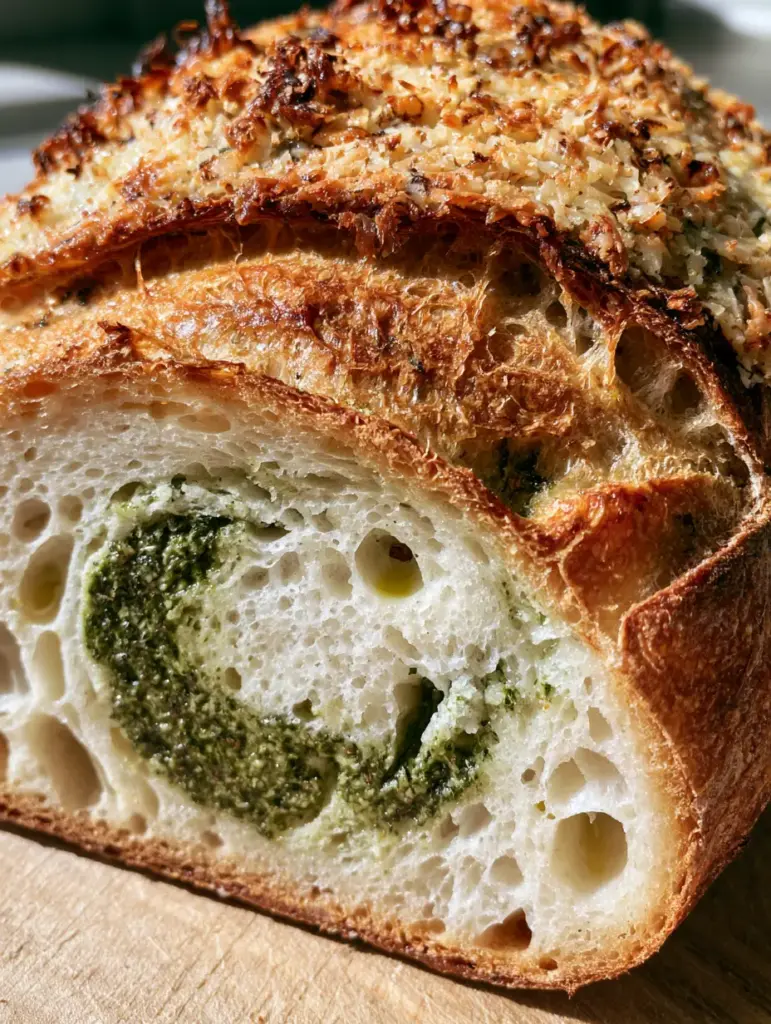
The secret to the Pesto Parmesan Sourdough Bread is not mixing the pesto into the dough initially, but rather laminating it in later. This ensures you see those fine droplets of oil and distinct green ribbons in every slice.
Building the Dough Foundation
In a large glass bowl, whisk your active starter into the warm water until milky. Add your bread flour and salt, mixing until a shaggy dough forms. Let this rest (autolyse) for 30 minutes. This allows the flour to fully hydrate, which is the first step toward a rustic bread crust.
Strength Building with Stretch and Folds
Over the next 2 hours, perform 4 sets of stretch and folds every 30 minutes. You want to feel the dough transform from a slack mass into a strong, elastic fermented sourdough dough. This strength is what allows for the airy crumb with large holes seen in the visual blueprint.
The Lamination and Pesto Integration
This is the most critical step for the Pesto Parmesan Sourdough Bread. Lightly mist your counter with water and stretch the dough out into a large, thin rectangle. Spread the vibrant green basil pesto evenly across the surface. Fold the dough over itself in thirds, like a letter, trapping the pesto inside. This creates the distinct, heavy swirl without over-mixing the colors.
Final Shaping and Parmesan Topping
Shape the dough into a tight boule, being careful not to let the pesto leak out. Place it in a banneton for its final cold proof (12-24 hours). Before baking, mist the top of the loaf with a tiny bit of water and press a generous layer of melted, toasted Parmesan cheese flakes onto the surface. Score the dough deeply to allow for maximum oven spring.
Expert Tips for the Perfect Artisan Boule
- Cold Fermentation: A long cold proof in the fridge (18+ hours) develops the best flavor and makes the dough easier to score.
- Steam is Key: Bake in a preheated Dutch oven to trap steam. This is what creates that thick, crunchy, rustic golden-brown crust.
- Don’t Oversurface: When applying the pesto, stay 1 inch away from the edges to ensure the dough can still seal during shaping.
- Check Your Pesto: If using store-bought, look for one that is vibrant green. Pale pestos will turn brown and unappetizing during the high-heat bake.
Serving Suggestions for Savory Sourdough
This Pesto Parmesan Sourdough Bread is a meal in itself, but it pairs beautifully with other savory favorites. Serve a thick, toasted slice alongside a bowl of Mexican street corn soup for a flavor-packed lunch.
For a full dinner spread, this bread is the perfect vessel for dipping into the sauce of asiago tortelloni alfredo. If you are hosting a summer BBQ, try it toasted next to crispy parmesan asparagus fries.
Storage, Reheating & Freezing
To Store: Keep the bread in a paper bag at room temperature for up to 2 days. Do not use plastic, or the toasted parmesan cheese will become soggy.
To Reheat: To restore the thick, crunchy, rustic crust, place slices in a toaster or a 350°F (175°C) oven for 5 minutes.
To Freeze: Slice the loaf completely before freezing. Store in a freezer-safe bag for up to 3 months. Toast directly from frozen for the best airy crumb texture.
Frequently Asked Questions
Yes, but look for refrigerated versions which tend to have a more vibrant green color and better flavor than shelf-stable jars.
Use a high-quality, fresh basil pesto and employ the lamination technique. Avoid over-mixing the pesto into the dough during the bulk fermentation, which can lead to oxidation and a dull color.
The goal is a slightly charred, toasted look. If you find your cheese is browning too quickly, place a piece of foil loosely over the loaf during the last 10 minutes of baking.
Pesto contains oil, which can weaken gluten. Ensure your dough has developed strong gluten through stretch and folds before adding the pesto, and don’t use more than 1/2 cup to prevent the dough from becoming too heavy.
The Ultimate Pesto Parmesan Sourdough Bread Recipe
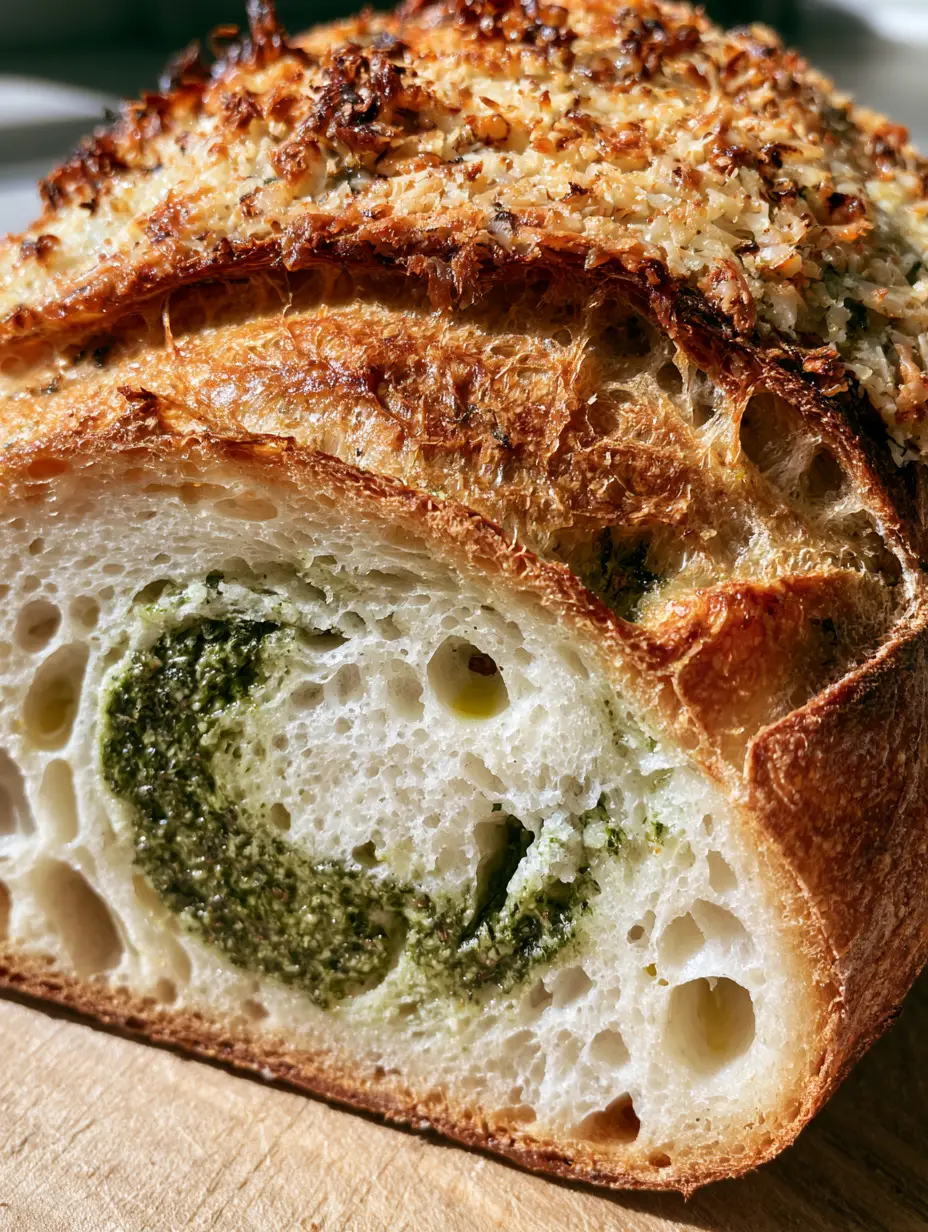
Pesto Parmesan Sourdough Bread with a Rustic Toasted Crust
Ingredients
Equipment
Method
- Whisk active starter into warm water. Add flour and salt, mixing until a shaggy dough forms. Rest for 30 minutes.
- Perform 4 sets of stretch and folds every 30 minutes over 2 hours to build gluten strength.
- Stretch dough into a large rectangle. Spread pesto evenly, leaving a 1-inch border. Fold dough into thirds.
- Shape into a tight boule and place in a proofing basket. Cold proof in fridge for 12-24 hours.
- Preheat Dutch oven to 450°F (230°C). Score the dough and top with a generous layer of Parmesan cheese.
- Bake covered for 20 minutes. Remove lid and bake for another 20-25 minutes until the crust is golden-brown and cheese is charred.
Notes
Ensure the Dutch oven is screaming hot before adding the dough for maximum oven spring.
Join the Baking Community!
Did your Pesto Parmesan Sourdough Bread turn out with a vibrant green basil pesto swirl? We want to see your results! Please save this recipe to your Pinterest Sourdough Board so you never lose it. Follow amy_menu_official for more artisan bread secrets.
Leave a 5-star rating in the comments below and upload a photo of your sliced boule. Seeing your soft and airy crumb makes our day!